StudyDuo
An AI body double is software that keeps you company while you work. It's a chatbot or voice assistant that hears your task, checks in during the session and asks what you got done. Most have a free tier. The evidence is new and small, though: the best-known test had 12 people, and its "AI" was secretly run by a person.
The name also covers AI avatars that sit in video meetings in your place; this guide is about the focus kind. Body doubling is a strategy for starting and finishing tasks, not an ADHD treatment (what it is). We make StudyDuo, which has no AI companion.
Three kinds, from chatbots to robots
- General assistants. ChatGPT and Gemini hold spoken conversations, so you can talk your task through at the start and report back when you stop. Nothing about them is built for focus; the setup is yours.
- Companion apps. Doppel, Fokku and Luna are built around the idea: a character that remembers your tasks, checks in and reacts to how the session went.
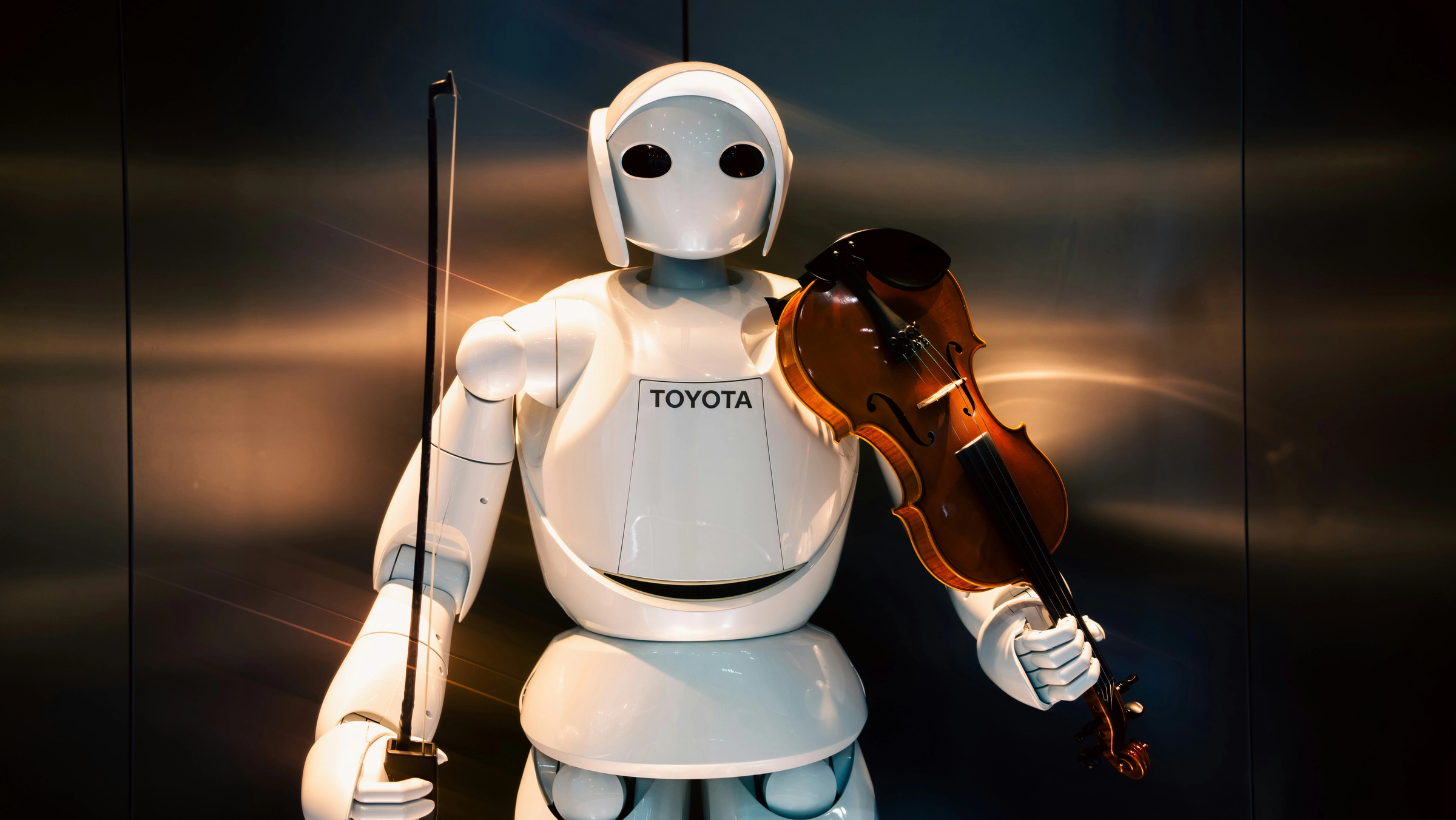
- Research prototypes. Labs have tested virtual partners in VR and small robots on desks. You can't buy these, but they produce most of the data on AI partners so far; one robot study is described in body doubling by yourself.
5 AI body double tools compared
Each row comes from the tool's own App Store listing, help page or privacy policy, opened on November 17, 2026:
| Tool | What it does in a session | Cost | Camera and microphone | Its privacy page or label says |
|---|---|---|---|---|
| ChatGPT (OpenAI) | Talks in real time; you report to it | Free; Go $8 and Plus $19.99, period not shown | Microphone; photos you upload | Audio data linked to you; usage data for third-party advertising |
| Gemini Live (Google) | Talks; sees your camera or screen if you share it | No price on the help page | Microphone; camera and screen sharing | Live recordings kept in History if it's on |
| Doppel (Mejoul) | An AI partner on a video call; remembers routines | Free 20 chats a day; $14.99 a month | Microphone; video calls | Data used to track you; calls not recorded |
| Fokku | Check-ins, a two-minute first step, three tones | Free 10 AI credits a day; Plus from $3.99 | No microphone input collected | Tasks stay on the phone; AI messages go to an unnamed provider |
| Luna (Heaven Eco Hub) | Voice sessions with check-ins you ask for | Free; optional $9.99 a month | Voice | Nothing sent to third-party AI providers |
ChatGPT
Its App Store listing points to Advanced Voice Mode, where you tap the soundwave icon "to have a real-time convo on the go". Paid plans appear as in-app purchases, Go at $8.00 and Plus at $19.99, with no billing period shown. Its privacy label lists audio data among the data linked to you. OpenAI's own help pages blocked our checker, so the rest of its privacy terms aren't summarized here.
Gemini Live
Gemini Live runs in the Gemini app on phones and tablets, not in the web app. You can turn on your camera "to show Gemini what you see", or share your screen. The camera switches itself off when Live is paused, when you leave the Gemini app or when the screen locks. So it stops looking the moment you drift to another app.
Doppel
Doppel puts a companion on a video call. "Open a video call, and your AI partner is right there studying alongside you," says its listing. Its companions keep their own schedules and react to whether you show up on time. The free plan gives 20 chat rounds a day, and video calls run on Chrono Coins, sold in the App Store from $5.99 for 3,000. The "Dopple Pass", as the store spells it, costs $14.99 a month, $39.99 a quarter or $139.99 for life. Its Chinese-language privacy policy names a company in Suzhou and says calls aren't recorded, while sign-up and onboarding screens are, for 30 days.
Fokku
Fokku "sits with you while you work, checks in gently, and celebrates every step", and when you're stuck it suggests a two-minute first step. You choose a tone: warm and gentle, energetic coach, or calm and steady. Every check-in, breakdown or chat message uses one AI credit, and the free plan includes 10 a day.
Luna
Luna, from Heaven Eco Hub, runs on iOS, Android, the web and macOS, free, with an optional $9.99-a-month developer program. Sessions run in voice mode, and you set the check-ins in your request, such as one at 20 minutes and one at 40. It remembers what you were working on between sessions.
What the small studies found
Research on any AI body double is a handful of papers, each small:
- The best-known test used a hidden human. In the VR study by Zinat Ara and colleagues (arXiv, 2025), 12 adults with ADHD laid virtual bricks for 20 minutes alone, beside a human, and beside "Remy". Participants were told Remy was AI-controlled. In fact the team used a Wizard-of-Oz setup: one of the authors secretly controlled its movements, while GPT-5 wrote its self-talk captions. Its results are in body doubling by yourself.
- A chatbot helped students procrastinate less. In a 2025 pilot trial, Seonmi Lee and colleagues gave 85 students at a South Korean university a to-do app for 30 days. Half, chosen at random, also got Moa, a fully automated chatbot; 75 finished. The authors report a significant change in procrastination over the month (P=.01), and only the chatbot group improved in time management and perceived stress. Moa coached and asked questions; it didn't keep anyone company, and nobody in the trial was screened for ADHD.
- More use went with worse outcomes. In a four-week randomized study with 981 people, researchers led by Cathy Mengying Fang compared text chats with two voice styles and found no significant effect of the mode. People who chose to use the chatbot more had worse outcomes on loneliness, socializing, emotional dependence and problematic use, an association rather than proof of cause.
A May 2026 roadmap by Valerie Tan, Kimberly Hegemann and Jens Gerken sets out twelve dimensions for designing body doubles and lists "the need for empirical studies" among the gaps. That sums up the state of the field: promising ideas, very little testing.
Privacy: camera, microphone and how long chats are kept
Talking to an assistant while you work means sending your voice, and sometimes your room, to a company. Google's Gemini privacy hub spells it out. It says recordings and transcripts of Live chats, "Gemini Live videos and screenshares" included, are saved in your History while that setting is on:
| Setting | Months kept |
|---|---|
| Reviewed by a person (up to) | |
| History on (default auto-delete) | |
| History off (about) |
A subset of chats is read by human reviewers, after being disconnected from your account. The companion apps differ widely:
- Doppel's App Store label lists data used to track you across other companies' apps, and its policy doesn't address the camera or microphone at all.
- Fokku keeps tasks and check-ins on your phone. Each AI message goes over HTTPS to an unnamed "large-language-model API provider", and Fokku says it doesn't store messages after the reply. Turning the AI off keeps the app fully offline.
- Luna's policy says no message, voice recording or photo "is ever sent to any third-party AI provider". It names Google Cloud as its host, and on iPhone your dictation goes through Apple's speech recognition.
Whichever you use, point the camera at your desk or leave it off; the assistant needs your task, not your room. On Gemini, the History setting is where you choose how long chats are kept.
What an AI can't do that a person can
- Be someone you don't want to let down. A person working beside you has their own day and notices yours. One participant in the VR study said of its virtual partner: "You can kind of easily ignore it..because it's just a computer."
- Replace care. An AI body double can help you start a task. It can't assess ADHD or adjust treatment, and Fokku's listing says so plainly: it's "a productivity companion, not a medical device". Questions about medication or diagnosis belong with a doctor.
If you try one, keep sessions short and scoped to a single task.
When to choose people instead
Pick people when the point is being seen working. StudyDuo's Focus Room is a live room of people, each with their task under their name, open around the clock. Rooms aren't recorded. You decide who sees your video, and everyone else sees a blurred silhouette. The body doubling online page shows what you'll see in a room.
FAQ
Can teenagers use these tools?
Their pages set different ages. The App Store rates ChatGPT 13+ and Doppel 16+, while Doppel's own policy only rules out children under 13. Google's Gemini Live page lists both "over 13" and "18 or over" as requirements.
Can I use Gemini Live with my school Google account?
Yes, if your school gives you access to Gemini Apps. Inside Live chats, a work or school account can currently use only Google Calendar, Google Keep and Google Tasks, and your Workspace administrator has to enable them first.
If I switch apps, does Gemini's camera come back on?
Not by itself after you switch apps or lock the phone: you turn it on again yourself. A paused chat brings the camera back when you resume it, but a screen you were sharing has to be shared again.