StudyDuo
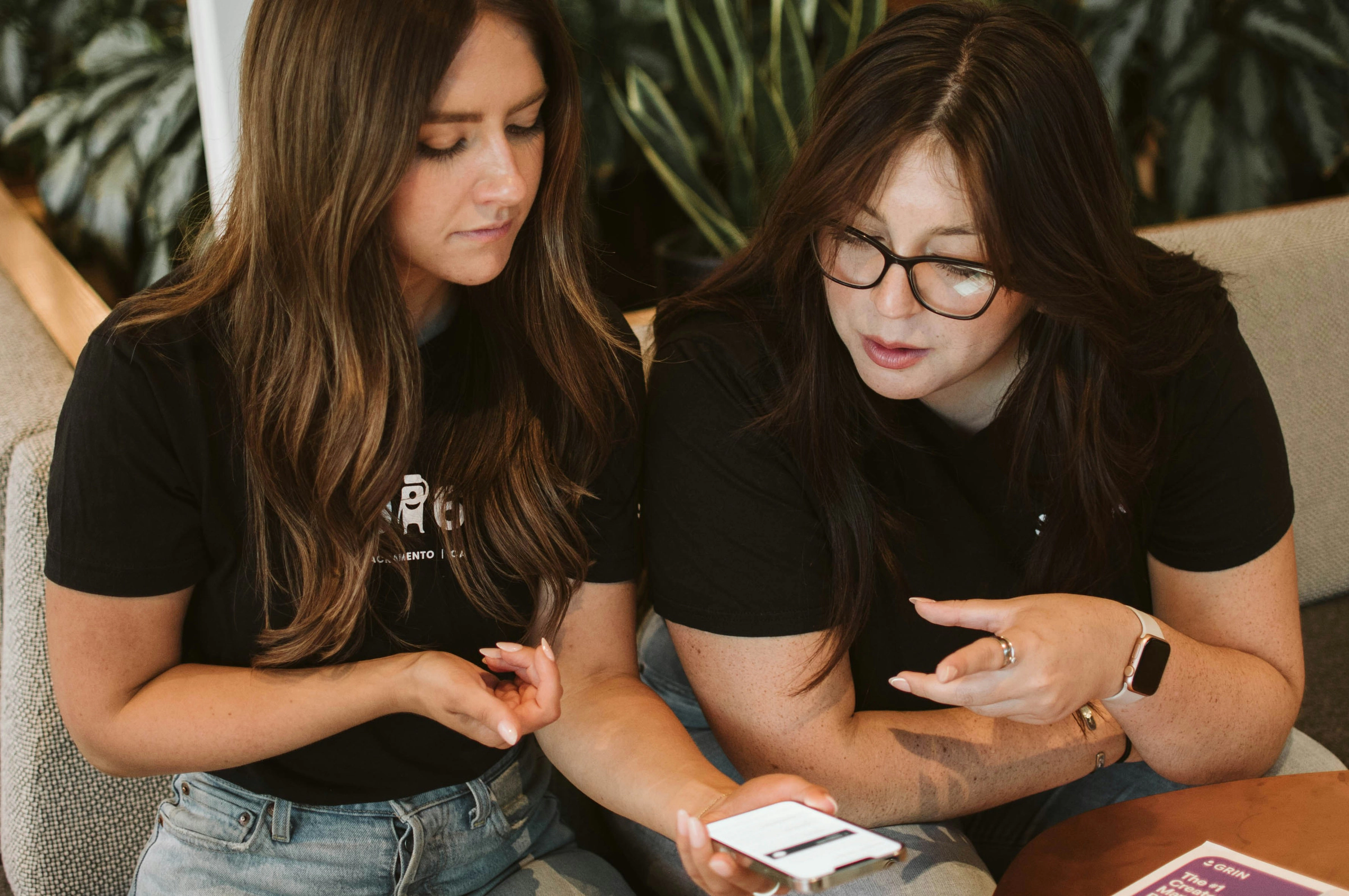
To study with a partner well, spend your time together on what you can't do alone. That means explaining the material from memory to someone who asks questions, quizzing each other with instant corrections, and arguing over answers before you check them. Do the first reading on your own, or side by side in silence.
Which method fits your pair
Most of these methods need a partner in the same course, but not all of them. With your own flashcards or an answer key, a friend who studies something else can still quiz you or listen while you teach.
| Method | Partner in another subject? | Talking? | Fits |
|---|---|---|---|
| 1. Teach it back from memory | Yes: they ask beginner's questions | Yes | Concepts and processes you'll have to explain |
| 2. Quiz each other | Yes, with your cards | Yes | Terms, formulas, dates, vocabulary |
| 3. Swap why and how questions | No | Yes | Reading-heavy courses, essay exams |
| 4. Work side by side in silence | Yes | No | First reads, writing, problems you must try alone |
| 5. Answer alone, argue, then check | No | Yes | Concept and multiple-choice questions |
| 6. Say how sure you are | Yes, with an answer key | Yes | Practice tests |
| 7. Shuffle the problem types | Yes, with an answer key | A little | Math, physics, chemistry, statistics |
| 8. Blank-page recall, then compare | Only to explain your page | At the end | Closing any session |
How to study with a partner: the 8 methods, step by step
1. Teach it back from memory
Split the material in half. Each of you studies your half as if you'll have to teach it, then teaches it with the book closed while the listener interrupts with questions. Then swap.
Both steps add something. Keiichi Kobayashi's 2019 meta-analysis of 28 studies found that preparing to teach improved learning (Hedges' g = 0.35), and that teaching after preparing improved it more (g = 0.56). The gain was largest when the teaching was interactive, with a listener who could ask questions (Japanese Psychological Research).
Keep the book closed. In a 2018 experiment by Koh, Lee and Lim, teaching a text without notes beat teaching it with notes in hand on a comprehension test a week later. It worked as well as simply practicing recall of the text (Applied Cognitive Psychology). The authors' reading: much of the benefit of teaching comes from pulling the material out of memory.
2. Quiz each other, and give the answer after every miss
Take turns asking and answering out loud. When an answer is wrong, the asker gives the right one at once. When it's right, move on.
Being tested beats rereading, even though rereading feels safer. In Roediger and Karpicke's 2006 experiment, 180 college students spent four study periods on a short passage in one of three ways. Those who only reread it recalled the most after five minutes and the least after a week, and they were the most confident they'd remember it (Psychological Science).
| Four study periods | After 5 minutes | After 1 week |
|---|---|---|
| Read it 4 times | ||
| Read it 3 times, recalled it once | ||
| Read it once, recalled it 3 times |
The rereaders got through the passage 14.2 times on average. The group that recalled it three times read it only 3.4 times.
The rule about misses comes from a 2005 study in which 258 people learned Luganda-English word pairs. Hearing the correct answer after a wrong one raised later recall of those words by 494% compared with no feedback (Pashler and colleagues). Feedback after a correct answer made little difference. With a partner holding the answer key, the correction takes a second.
3. Swap why and how questions
Before you meet, each of you writes five questions that can't be answered in one word. Start them with "Why does...?", "How is this different from...?" or "What would happen if...?" At the session, take turns asking them and answering out loud.
Alison King tested this in 1990 with college students learning from lectures. Students who wrote their own questions from generic prompts like these, then took turns putting them to each other, asked more critical-thinking questions and gave more explanations. They also scored higher on the material than groups who just discussed it, or who questioned each other without prompts (American Educational Research Journal).
4. Work side by side in silence
Not every hour together needs talking. Some work has to be tried alone: the first read of a chapter, an essay draft, a problem set before you compare answers. Sit together, work in silence on your own tasks, and check in at the end. People call this body doubling: what it is and why it may help.
It's also the method that works online with no planning. StudyDuo's Focus Room runs around the clock: people work on camera, mics stay off, and everyone's task shows under their name. For the talking methods, a 1:1 session is one other person on video, with sound: post a time or join someone who's waiting. You need a verified photo to join one.
5. Answer alone, argue, then check the key
Take one practice question at a time. Each of you writes an answer without talking. Compare, and where you disagree, each argues for your answer until you agree or run out of reasons. Only then read the key and its explanation.
It works even if you study with a partner who doesn't know the answer either. A 2009 study in an undergraduate genetics course had students discuss a concept question with classmates, then answer a similar one alone. Discussion improved the second answers, even in groups where nobody had the right answer at first (Smith and colleagues, Science). A 2011 follow-up with 212 genetics students found discussion followed by an explanation about twice as effective as the explanation alone (CBE Life Sciences Education). Reading the key last is the pair version of that order.
6. Say how sure you are before you check
When you quiz each other, the answerer adds a number from 1 to 5 for how sure they are. After the round, sort the misses: a confident mistake needs one clear correction, and an unsure one goes back in the pile for next time.
That split comes from a 2001 experiment by Butterfield and Metcalfe. Errors made with the most confidence were the most likely to be fixed on a retest after people saw the right answer, though the researchers had expected the opposite. Saying the number out loud also keeps either of you from claiming you knew it all along.
7. Shuffle the problem types
In problem-based courses, each of you picks practice problems from several chapters for the other. Hand them over in a mixed stack, so the chapter heading doesn't give the method away.
In a 2007 experiment by Rohrer and Taylor, 18 college students learned to find the volume of four unusual solids, then practiced with problems grouped by solid or mixed together. Grouped practice looked better at the time: 89% correct against 60% (Instructional Science). On the test a week after the last practice, the mixed group scored 63% and the grouped group 20%. The sample was small but the gap was large, and a partner makes the mix easy, since you can't predict what someone else picks.
8. Blank-page recall, then compare
Close everything. Each of you writes all you remember about the topic on a blank page, alone, for five to ten minutes. Then swap pages and mark what the other has that you don't.
Writing it alone turns the exercise into retrieval practice for both of you, as in method 2, and the other person's page is a map of your gaps. Recalling it together out loud is a different exercise with a worse record; Study Alone or in a Group? has the research.
A 90-minute session plan
Here's one way to fit the methods into the next 90 minutes you study with a partner:
| Minutes | What you do |
|---|---|
| 0 to 5 | Pick the topic and split it in half |
| 5 to 30 | Study your half in silence, as if you'll teach it (methods 1 and 4) |
| 30 to 50 | Teach your half with the book closed; the listener asks why and how (methods 1 and 3) |
| 50 to 60 | Break, away from the desk |
| 60 to 75 | A mixed quiz, with a confidence number for every answer (methods 2, 6 and 7) |
| 75 to 85 | The two hardest questions: each answers on paper, you compare, then read the key (method 5) |
| 85 to 90 | Blank-page recall, compare, and choose the next topic (method 8) |
Still looking for someone? Here's where to find a study partner and how to ask. Studying with friends instead of a classmate you just met? The rules that stop a session from turning into a chat are in How to Study With Friends Without Getting Distracted.
FAQ
What if one of us knows the subject much better?
Both still gain. The stronger partner learns by explaining, and the other gets someone who can answer follow-up questions on the spot. Swap the teaching role every half so nobody only listens.
Do these methods work on a video call?
Yes. All of them work on a call with sound; for written problems, share a screen or hold the page up to the camera. Silent side-by-side work needs cameras, not mics.
What if we disagree and the answer key doesn't settle it?
Write the question down with both lines of reasoning and take it to your teacher, TA or tutoring center. Seeing the two explanations side by side shows exactly where your understanding splits.
Can a flashcard app replace quizzing each other?
Partly. An app works as long as you answer from memory before you flip the card. A partner adds questions you didn't write yourself and follow-ups when an answer is only half right.