StudyDuo
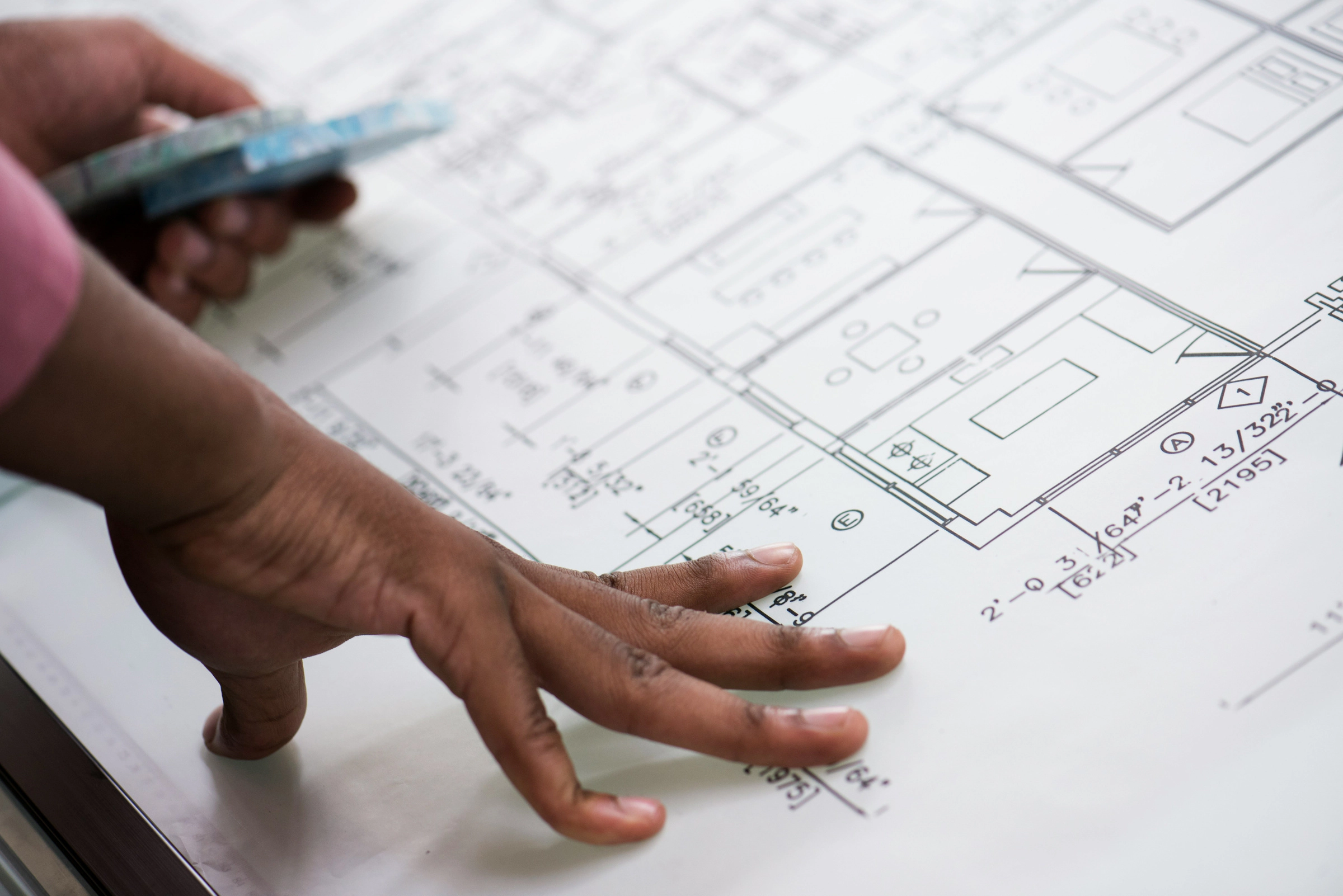
An FE exam study group is three to five engineering students or recent graduates in one discipline. They work timed problem sets with the NCEES Reference Handbook and review the misses together. The FE runs year-round on computer, so members rarely test on the same day, and a group that meets online can keep going after they graduate.
The FE exam as of November 2026
The Fundamentals of Engineering exam is given year-round at NCEES-approved Pearson VUE test centers in the United States, Canada and US territories; NCEES lists no online option. NCEES's Examinee Guide, May 2026 edition, sets the appointment out like this:
| Part | Time |
|---|---|
| Nondisclosure agreement | 2 minutes |
| Tutorial | 8 minutes |
| Exam: 110 questions | 5 hours 20 minutes |
| Scheduled break, after about half the questions | 25 minutes |
| Whole appointment | 5 hours 55 minutes |
That's 2.9 minutes a question (our arithmetic). The only reference is the NCEES handbook, shown on screen as a searchable PDF on a 24-inch monitor. You can bring one NCEES-approved calculator, and a TI-30XS is available on screen.
Each attempt costs $225. The year has four testing windows: January to March, April to June, July to September and October to December. You can sit the exam once per window and three times in any 12 months, though some licensing boards are stricter. Wrong answers cost nothing, and NCEES doesn't publish the passing score.
FE pass rates: first time and repeat
In NCEES's 2024-25 fiscal year (October 2024 to September 2025), 57,902 people took the FE, more than in any year since it moved to computer (NCEES Squared 2025). First-time takers passed far more often than repeat takers in every discipline:
| Discipline | First time | Repeat |
|---|---|---|
| Mechanical | ||
| Chemical | ||
| Environmental | ||
| Electrical and computer | ||
| Industrial and systems | ||
| Civil | ||
| Other disciplines |
Source: NCEES, Squared 2025
Timing matters too. Among first-time takers from ABET-accredited programs in NCEES's 2014 to 2025 data, 71.34% passed before graduating and 70.62% within 12 months of it. For those who waited longer than 12 months, the rate fell to 63.43%.
The kind of degree shows up as well (NCEES Squared 2025). First-time civil takers with an EAC-accredited engineering degree passed at 64%, against 32% for the 314 with an ETAC-accredited engineering technology degree. In mechanical the split was 72% and 33%, in electrical and computer 67% and 34%. If your degree is in engineering technology, start the group earlier and plan extra review weeks.
That's the case for a group that outlasts graduation. NCEES says the April to June window is the busiest, because many people test soon after graduating. Classmates who move to new jobs and cities can keep one weekly session online.
Where to find an FE exam study group
- Your department. Ask whether it runs FE reviews or a student-led group, and when the next one starts.
- Your discipline's student chapter. Members share your syllabus, and seniors tend to test around graduation.
- Discord servers. Pick a server with posts from this week, and keep to its public channels. Keep your phone number and MyNCEES login to yourself (how to judge a server).
- StudyDuo. Find Partners can filter by interests like Civil, Mechanical or Electrical engineering, plus country and city. Message people who list your discipline.
Match on discipline first. The seven FE exams have different specifications, and they overlap mainly on mathematics, ethics and engineering economics (NCEES specifications). If your major has no FE exam of its own, NCEES's Other Disciplines exam is the one you'd take, so look for partners on that one. Then match on window. If you can't find three people, one FE exam study partner who tests in the same quarter is enough for the routine below.
Why the handbook changes how you study
Having the handbook on screen feels like a safety net, and research on open-book exams says that's the trap. A 2016 systematic review screened 4,192 studies and kept 37 that compared open-book and closed-book exams (Durning et al.). Students may prepare more for closed-book exams, and people took longer to finish open-book ones. Studies of exam scores favored closed-book exams, especially when students had prepared more for them.
An experiment points the same way. In Agarwal and Roediger's 2011 study, people who expected an open-book test spent less time studying, and did worse on a later test without the book. Both studies used other subjects, not engineering, and the FE handbook holds formulas, not answers. Still, at 2.9 minutes a question, an equation you have to hunt for costs time you don't have.
So an FE exam study group should train two things: knowing which equation a problem needs without the book, and finding it in the handbook in seconds.
A weekly online session
- Handbook race, 10 minutes. One member names a quantity, such as the moment of inertia of a rectangle or the Reynolds number. Everyone finds the equation in the handbook PDF and calls out the page. Aim for under a minute.
- Timed set, 45 minutes. Fifteen problems from one topic of your discipline's specification, alone, with cameras on and mics off. At 2.9 minutes each, that's about the exam's pace.
- Review, 30 minutes. Each member walks through one miss: the handbook section, the step that failed, and what to check next time.
- Plan, 5 minutes. Next week's topic and who brings the problems.
Use the same handbook version as the exam, from your MyNCEES account, so page numbers match.
The weekly topic comes from your discipline's specification, which gives a range of questions for each knowledge area. Civil had the most first-time takers in 2024-25, 16,639 (NCEES), so here's a 10-week plan from its specification, in force since July 2020:
| Week | Civil knowledge areas (questions on the exam) |
|---|---|
| 1 | Mathematics and statistics (8 to 12), ethics and professional practice (4 to 6) |
| 2 | Engineering economics (5 to 8), statics (8 to 12) |
| 3 | Dynamics (4 to 6), mechanics of materials (7 to 11) |
| 4 | Materials (5 to 8), fluid mechanics (6 to 9) |
| 5 | Water resources and environmental engineering (10 to 15) |
| 6 | Structural engineering (10 to 15) |
| 7 | Geotechnical engineering (10 to 15) |
| 8 | Transportation engineering (9 to 14) |
| 9 | Surveying (6 to 9), construction engineering (8 to 12) |
| 10 | A full 110-question practice exam alone, with the 25-minute break after question 55, then review together |
Some work belongs to the group and some doesn't:
| Task | Together or alone | Why |
|---|---|---|
| Handbook race | Together | Speed improves when someone is timing you |
| Timed problem sets | Alone, at the same hour | The exam is solo; a shared start time keeps the pace honest |
| Reviewing misses | Together | Someone else spots the skipped step |
| Learning a new topic | Alone | Everyone's gaps differ |
| NCEES practice exam | Alone, then review together | It's the closest thing to exam day |
Between meetings, members can do their sets at the same time in StudyDuo's Focus Room, or in the once-a-day Study Hour, shown in your own time zone. The online study group page explains both, and our guide to studying with a partner has formats for two.
After the exam
- Results usually come 7 to 10 days later, as pass or fail.
- If you fail, NCEES sends a diagnostic report with your performance on each major topic. Bring it to your FE exam study group and build the next weeks around the weakest topics. You can retest in the next testing window.
- Keep questions private. NCEES's nondisclosure agreement bars posting or sharing "any test questions or answers", including in chat rooms. Anyone who has already tested can talk about timing and the handbook, never the problems.
- Next: the PE. NCEES designed the PE for engineers with at least four years of work experience in their discipline. When that time comes, a PE exam study group can run the same way, with the PE's own references.
For the physics behind the FE, see how a physics study group solves problems.
FAQ
Can I bring my own copy of the handbook?
No. NCEES supplies the handbook on screen during the exam, and you can download the current version for practice from your MyNCEES account.
Is the FE harder on a later attempt?
Not by design: NCEES scores every form against the same standard and adjusts for small differences in difficulty, with no fixed share of people who must pass.
Can I take a break whenever I need one?
Yes, but only the scheduled break stops the clock. Unscheduled breaks are allowed at any time, and the time you take is deducted from your testing time.
Where do official practice exams come from?
NCEES sells its own Interactive Practice Exams for each of the seven FE disciplines, and in 2025 it added a second volume for each.